
Key takeaways
- Not legally required for most private businesses. The Welsh Language Standards apply to public bodies.
- A real advantage for trust, standing out, tenders and visibility in Welsh-language search.
- Most worthwhile in Welsh-speaking areas, for public-sector work and for community brands.
- You can start small by translating key pages first, with free help from Helo Blod.
- Build it properly with human translation, indexable pages, hreflang and a clear language switch.
- Quality comes first: poor Welsh can do more harm than none.
Most private businesses in Wales are not legally required to have a bilingual website, but many choose to. A Welsh and English site builds trust, reaches Welsh-speaking customers, helps with public-sector contracts and sets you apart from competitors. Whether it is right for you depends on your audience, location, budget and goals.
Welsh is an official language in Wales, and the Welsh Government’s Cymraeg 2050 strategy aims for a million Welsh speakers by 2050, so the language is becoming more visible. That leads many business owners to ask whether their website should be bilingual. For most, it is a choice rather than an obligation. This guide covers the legal position, the benefits, the cost and how to do it properly, so you can decide what suits your business.

Is a bilingual website a legal requirement in Wales?
Not for most private businesses. The Welsh Language Standards, made under the Welsh Language (Wales) Measure 2011, apply to public sector and statutory bodies rather than typical private companies. You may still face Welsh-language requirements when bidding for public-sector contracts or grant-funded work.
This is widely misunderstood. The Standards, enforced by the Welsh Language Commissioner, place legal duties on public and statutory bodies (councils, the NHS, government departments, regulators and similar) to provide Welsh-language services and treat Welsh no less favourably than English. A shop, a tradesperson, a restaurant or an agency has no such duty for its website. The main exception is when you contract with or tender to public bodies, where bilingual delivery is often a condition, so check the requirements of any public-sector work you go for.
What are the benefits of a bilingual website for a Welsh business?
A bilingual website builds trust with Welsh-speaking customers, shows respect for the language and the community, and helps you stand out, since relatively few businesses offer a full Welsh service. It can also strengthen public-sector bids, support a Welsh brand identity and capture Welsh-language searches that competitors ignore.
Even as an optional extra, a Welsh-language offer has clear advantages:
- Trust and goodwill: Welsh speakers respond well to businesses that use the language, and it shows you are part of the community.
- Standing out: research suggests only around one in eight businesses offers a complete Welsh-language service.
- Public-sector and grant work: bilingual capability strengthens tenders and is sometimes required.
- Search visibility: proper Welsh pages can rank for Welsh-language searches that few rivals target.
- Brand identity: it reinforces a proudly Welsh brand, which matters to many customers.
There is also formal recognition available. The Welsh Language Commissioner’s Cynnig Cymraeg (Welsh Offer) scheme recognises businesses and charities that provide services in Welsh, giving you a mark to display that reassures Welsh-speaking customers.
When is a bilingual website most worth it?
It pays off most for businesses serving Welsh-speaking areas, those bidding for public-sector or grant-funded work, community-focused local businesses and brands that want to show they are rooted in Wales. The stronger the Welsh-speaking presence in your market, the bigger the benefit.
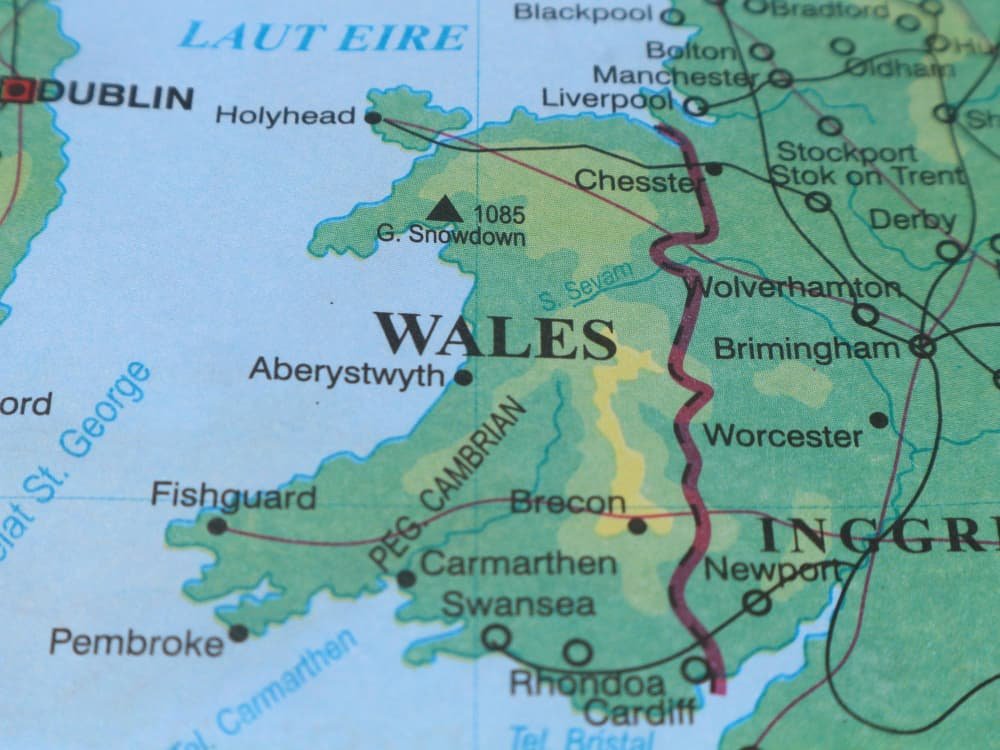
Welsh is spoken across Wales, but more widely in some areas than others. There are strong Welsh-speaking communities in Gwynedd, Anglesey, Ceredigion and Carmarthenshire, and a more mixed picture in the south-east. The more your customers use Welsh, or like to see it, the more a bilingual site is worth. It can also make sense regardless of location if your values or public-sector plans make a Welsh offer important. A family business in Carmarthenshire, or a firm going after council and NHS contracts, has a far clearer case than an online retailer selling across the UK.
When might you not need a fully bilingual website?
If your budget is tight, your customers rarely use Welsh, or you mainly serve national or international markets, a fully bilingual site may not be justified yet. You can start with your homepage and key pages, then expand later if it proves worthwhile.
A bilingual site means two versions to build, translate and keep in step. If your audience or budget does not justify that right now, a partial approach is perfectly reasonable. Translating your homepage, contact details and core service pages while leaving deeper content in English still serves Welsh speakers and shows respect for the language, at a fraction of the cost and upkeep.
What should you translate first?
Start with the pages that matter most to Welsh-speaking visitors: your homepage, main service or product pages, contact and about pages, and key calls to action. These carry the most value and make your Welsh offer clear before you move on to blog posts and deeper content.
A sensible order is:
- Homepage: your front door and the clearest sign of a Welsh offer.
- Core service or product pages, where customers make decisions.
- Contact and about pages, so Welsh speakers can reach you in Welsh.
- Key calls to action and forms, so the whole journey works in Welsh.
- Blog and deeper content last, as budget allows.
Working in this order means the most important parts of your site serve Welsh speakers first, and you spread the cost over time. You can extend the Welsh version later as the value becomes clear.
How much does a bilingual website cost, and is there free help?
It costs more than a single-language site, mainly for professional translation and the upkeep of two versions. Helo Blod, a Welsh Government service, offers free Welsh translation and advice for small businesses, and Business Wales provides free guidance. Starting with key pages keeps costs manageable.
The extra cost comes from translation and from updating both languages whenever the site changes, so plan for upkeep as well as the initial build. Helo Blod will translate short pieces of text at no cost and give advice, which suits a small business getting started, and Business Wales (itself fully bilingual) can point you to further help.
Prioritising your most important pages spreads the cost and lets you test the value before going further. The total depends mainly on how many pages you translate and how your site is built. A small brochure site is far cheaper to make bilingual than a large site with hundreds of pages or an online shop.
How do you build a bilingual website properly?
Use professional translation rather than machine translation, give each language its own indexable pages (for example under /cy/ and /en/), add hreflang tags so Google serves the right version, include a clear language switch and keep both versions in step. Built this way, both languages can rank and read naturally.
The technical setup matters as much as the words:
- Use professional, human translation. Poor or machine-translated Welsh can offend readers and damage trust.
- Give each language real, indexable pages, usually under /cy/ and /en/ paths, rather than a translate button that hides content from search engines.
- Add hreflang tags so Google shows the right language to the right person.
- Set the correct lang attribute (cy or en) on each page.
- Put a clear language switch on every page.
- Update both versions together whenever content changes.
We build bilingual sites for businesses across South Wales as part of our website design work, and can advise on which pages are worth translating first.
Does a bilingual website help your SEO?
It can, if it is built properly. Real Welsh-language pages let you rank for Welsh searches that few competitors target, and hreflang tags help Google serve the right language. Built badly, with machine translation or duplicate content, it can confuse search engines and hurt rankings.
Because relatively few businesses offer proper Welsh content, competition for Welsh-language searches is often low, which is an opening if your audience searches in Welsh. Each language version needs to be real, indexable content with the right hreflang and lang signals so Google understands and serves it correctly. A site bolted together with an auto-translate plugin tends to create thin or duplicate pages that help no one. Link between the Welsh and English versions of each page and include both in your sitemap, so search engines understand the full structure.
Common bilingual website mistakes
The most common mistakes are relying on Google Translate, treating Welsh as an afterthought, letting the two versions drift apart, leaving out hreflang tags and hiding the language switch. Quality and correct setup matter more than speed.
- Using machine translation instead of a professional translator.
- Translating some pages and forgetting others, leaving the Welsh version incomplete.
- Letting the Welsh and English versions drift apart after updates.
- Leaving out hreflang tags, so Google serves the wrong language.
- Hiding the language switch where visitors cannot find it.
- Assuming a bilingual site is a legal requirement when, for most businesses, it is not.
How Eigme can help
Turn this into results.
We can help you put this into practice with a clear plan, hands-on delivery and reporting in plain English.
Book a free strategy call →Frequently asked questions
Is it a legal requirement to have a Welsh language website?
Not for most private businesses. The Welsh Language Standards under the Welsh Language (Wales) Measure 2011 apply to public sector and statutory bodies. Bilingual provision is often required when bidding for public-sector contracts or grant-funded work, though, so check the terms of any such work.
How many people speak Welsh?
Around half a million people in Wales could speak Welsh at the 2021 census, and the Welsh Government’s own surveys suggest higher figures. Welsh is spoken across the country and most widely in areas such as Gwynedd, Anglesey and Ceredigion. The Cymraeg 2050 strategy aims for a million speakers by 2050.
Can I use Google Translate for my Welsh website?
It is best avoided. Machine translation often produces awkward or incorrect Welsh, which can put off Welsh speakers and damage trust. Use a professional translator instead. For small businesses, the free Helo Blod service from the Welsh Government can translate short pieces of text.
How do I get my website translated into Welsh for free?
Helo Blod, a Welsh Government service, translates short pieces of text and offers advice to small businesses at no cost. Business Wales can point you to other support. For a full website, translate your key pages first and use these services to keep costs down.
Does a bilingual website help with SEO in Wales?
Yes, if it is built properly. Indexable Welsh pages with correct hreflang tags can rank for Welsh-language searches that few competitors target. Machine translation or duplicate content can confuse search engines and harm rankings, so quality matters.