
Content audit
Every page scored by traffic, value and potential.
Search that speaks your customers’ language.
Explore industries →Content Optimisation
Audit, refresh, consolidate and re-optimise existing content to recover lost rankings and lift traffic. It is often faster than publishing new pages.
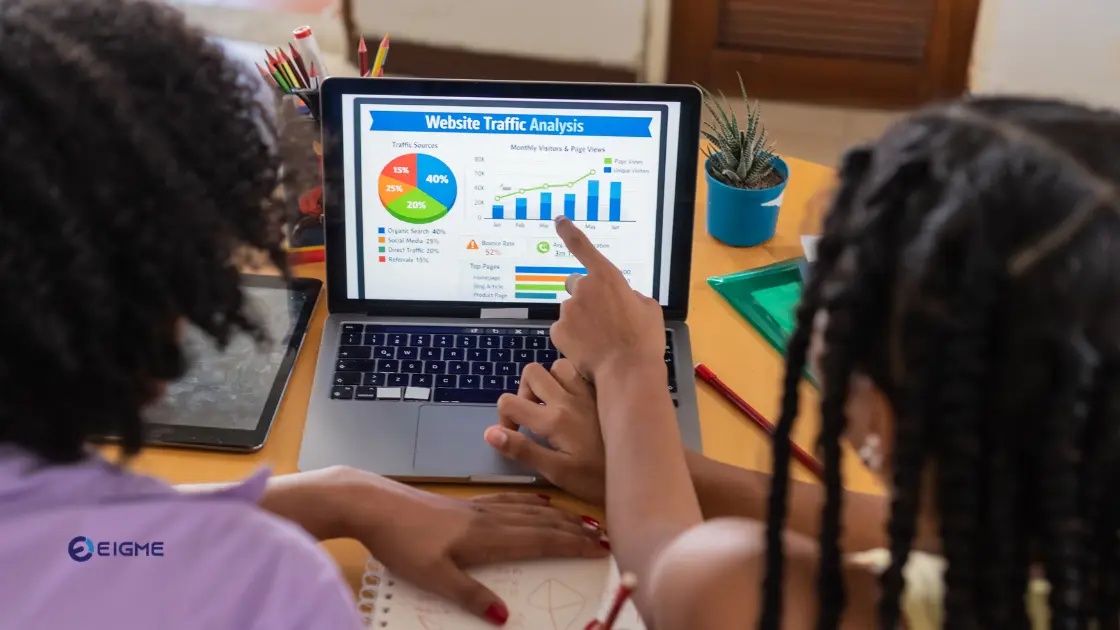
Definition

Content optimisation improves existing pages so they better match search intent and current information. It covers refreshing outdated content, merging competing pages, improving structure and on-page SEO, and strengthening internal links. It is usually the fastest route to more organic traffic.
What’s included
Every page scored by traffic, value and potential.
Revive pages that have lost rankings.
Stop your own pages competing.
Update facts, depth and structure.
Merge thin pages with proper redirects.
Titles, headings, schema and links.
Why it matters
Existing pages already have history and links.
Improving beats rewriting from scratch.
Fewer, stronger pages are easier to rank.
Process
Traffic, rankings and quality.
Keep, refresh, merge or remove.
Rewrite and restructure.
Consolidate with 301s.
Track recovery and growth.
In depth
Pages sitting on page two or low on page one are often the quickest wins. A focused update can move them into the top positions far faster than a brand-new article could get there.
Search intent shifts over time. We check what Google now rewards for each query and adjust the page’s angle, depth and format to match.
By comparing your page with the results that outrank it, we find missing questions, entities, examples and data, then add them in a way that genuinely improves the page.
Outdated statistics, old screenshots and expired advice erode trust. We update facts, cite current sources and show when the page was last reviewed.
Several thin pages competing for the same search can hold each other back. Combining them into one strong page, with redirects, often lifts rankings for the whole topic.
Clear headings, shorter paragraphs, tables, images and stronger calls to action help readers act, which supports both rankings and conversions.
Is it right for you?
Pages that used to perform well are slowly losing visits.
Many pages rank just outside the top results.
Your blog has years of posts that have never been updated.
Several pages target the same topic and none rank well.
What we do
Updating facts, examples, structure and on-page SEO for existing pages that still have potential.
Merging overlapping or thin pages into one comprehensive resource, with redirects to protect links.
Removing or noindexing content with no value, traffic or links, so your best pages stand out.
Clearer calls to action, internal links and trust signals that turn readers into enquiries.
How we work
We review every page’s traffic, rankings, links and quality.
Each page is marked to keep, update, merge or remove.
We optimise the pages with the biggest potential first.
We track results and move on to the next batch.
Avoid these
Updating a page does not mean moving it. Changing URLs without redirects throws away links and history.
Changing the published date without improving the content does not fool search engines or readers.
Removing pages that have backlinks without redirecting them wastes authority.
Longer is not better. Every addition should answer a question or add real value.
Updated pages need links from related content so search engines and readers can find them.
Use cases
Sites with years of articles usually have dozens of pages that can be improved quickly.
After a Google core update, improving quality and usefulness across key pages is often the best response.
Refreshing service pages with clearer scope, proof and FAQs can lift both rankings and conversions.
Category and buying-guide content often needs updating as products and trends change.
Post-migration audits catch thin, duplicated or lost content before it costs you traffic.
How we measure it
Movement for updated pages and their topics.
Visits to optimised pages before and after.
Enquiries and sales from refreshed content.
Fewer, stronger pages doing more of the work.
Our principles
Every decision starts with Search Console, analytics and backlink data, so we know which pages earn traffic, links and conversions before touching them.
Pages that already perform well are improved carefully, keeping the elements that earn rankings and links.
We judge every change by whether it makes the page more useful to the person searching.
We update pages in batches and measure each one, so you can see what is working and why.
We log every change we make, so results can be traced and any change reversed if needed.
Further reading
Older pages lose ground for specific reasons. This guide covers finding the ones worth saving, working out what went wrong and updating them properly.
Featured snippets and People Also Ask boxes reward clear, well-organised answers. This guide covers finding the questions you can win and formatting answers Google can lift.
A practical process for writing content that earns search visibility and turns readers into enquiries, from search intent and outlines to on-page checks and calls to action.

Free growth strategy call
White-hat methods onlyMonthly reporting you can readNo long lock-in contracts
FAQ
Review key pages at least annually, and sooner for fast-changing topics.
Removing or merging thin pages with proper redirects usually helps by concentrating value.
Refreshed pages often move within weeks once re-crawled.
Yes, and any other content that should be earning search traffic.
A review of every page on your site, using traffic, rankings, links and quality, to decide which pages to keep, improve, merge or remove.
For most small and mid-sized sites, around two to four weeks, depending on how many pages you have.
No, unless there is a strong reason. Keeping the URL preserves its history and links.
It can if done carelessly, for example by removing the sections that earned rankings. We protect what works and measure every change.
If a page already targets the topic and has some history, updating it is usually faster and more effective than starting again.
Yes. We check file sizes, formats, alt text and captions as part of each update.
Yes. Titles and descriptions are reviewed with each update to improve click-through from search results.
We look for pages targeting the same search intent, then merge them into the strongest URL and redirect the rest.
Yes. We identify pages competing for the same searches and recommend how to separate or combine them.
Yes. Product and category content can be optimised in the same way, with extra focus on specifications and buyer questions.
Mainly Google Search Console and GA4, plus established SEO tools for rankings, links and crawling.
A full audit once a year, with lighter quarterly reviews of your most important pages, works well for most sites.
Yes. We can share our checklist and run a short session so your team can maintain pages between audits.
Usually we improve what is there and add the missing pieces. Full rewrites are reserved for pages that no longer match search intent at all.
Let’s talk
Tell us where you are today, where you want to go, and we’ll identify the highest-impact opportunities.